
Quick verdict
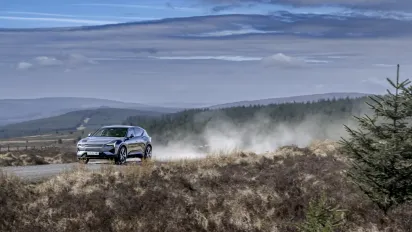
The Polestar 3 Performance is expensive, there is no getting around that, but after spending a couple of weeks with one it is also one of those rare cars where you begin to understand where the money has gone. It feels beautifully put together, the cabin is exceptionally comfortable, the performance is phenomenal and, perhaps most impressively, Polestar has managed to make a large electric SUV weighing well over two tonnes feel genuinely entertaining to drive.
There are frustrations. Too many basic controls are buried in the touchscreen, some of the driver-assistance technology can be overly sensitive and there are a few features I would expect on a car at this price that simply aren't there. None of those points, however, changes my overall opinion. The Polestar 3 Performance is a seriously accomplished luxury electric SUV and one that deserves to be considered alongside established premium competitors from BMW, Mercedes-Benz, Porsche and Audi. After two weeks with it, I was very reluctant to hand the keys back.
Polestar 3 Performance at a glance
- Power: 500kW / 680hp / 670bhp
- Drivetrain: Dual-motor all-wheel drive
- 0-60mph: 3.8 seconds
- Official WLTP range: up to 373 miles
- Battery: 106kWh
- Maximum DC charging: up to 350kW on a compatible 800V charger
- 10-80% DC charging: as little as 22 minutes under ideal conditions
- Wheels: 22-inch forged Performance alloys
- Suspension: Dual-chamber active air suspension with Polestar Engineered chassis tuning
- Seats: Five
- Boot: 484 litres to the top of the rear seat backs, including 90 litres beneath the floor
- Price: from £92,040 at the time of writing

The current Polestar 3 Performance produces 500kW, or 680hp, from its dual-motor powertrain and uses a 106kWh battery with an 800V electrical architecture. That is worth mentioning because the Polestar 3 has evolved since it was originally launched and some older road tests online quote different performance, battery and charging figures.
What exactly is the Polestar 3?
Before going any further, it is worth clearing up something that can cause a little confusion with Polestar's model range. The number doesn't tell you how big or luxurious the car is.
It would be perfectly reasonable to look at a Polestar 2, Polestar 3 and Polestar 4 and assume the system works like many traditional manufacturers, where a larger number generally means a bigger or more expensive vehicle. That's not how Polestar has historically named its cars. The numbers broadly reflect the sequence in which models have been introduced.
The Polestar 1 came first, followed by the Polestar 2, then Polestar 3 and Polestar 4. As a result, the Polestar 4 isn't simply a bigger or more luxurious Polestar 3. In fact, the Polestar 3 is the large luxury SUV in the current range, while the Polestar 4 takes a lower, more coupé-like approach.
Think of the number as the model's name rather than its position within a conventional hierarchy.

Living with the Polestar 3 rather than simply test driving it
My relationship with the Polestar 3 actually began some time before this particular car arrived. I first saw it around the time of its launch and immediately thought it was an impressive-looking SUV. I subsequently drove one around the track at Donington Park and remember climbing out thinking just how remarkable it was that something so big and heavy could behave the way it did. I then drove the Polestar 3 again at a Polestar event at Bicester Motion.
Those short experiences told me the Polestar 3 had potential, but spending a couple of weeks actually living with a car gives you a much better understanding of it. During my time with the Performance I've driven it around Brighton, taken it across some of the B-roads through the South Downs, travelled from Brighton to Bicester and back, covered plenty of motorway miles and taken it right into central London. Add the earlier track driving into the equation and I've now experienced the Polestar 3 in just about every environment you're realistically likely to encounter.
Perhaps the biggest compliment I can give it is that there wasn't really an environment where it felt out of place. On a motorway it becomes a quiet, exceptionally comfortable long-distance cruiser. In London it is remarkably easy to drive, although you certainly become more conscious of its width when streets and parking spaces become tighter. Find a good B-road, however, and the Polestar reveals another side to its character entirely. That's where it surprised me most.
What does the Polestar 3 share with the Volvo EX90?
Underneath the Polestar 3 is Volvo's SPA2 electric vehicle architecture, which also underpins the Volvo EX90. That immediately makes the relationship between the two cars quite interesting, but calling the Polestar a sportier EX90 would be doing it a considerable disservice.
They are better viewed as siblings rather than twins. The Volvo EX90 puts greater emphasis on seven-seat family practicality, comfort and the traditional Volvo approach to luxury and safety. The Polestar 3 only has five seats, sits lower and adopts a considerably stronger focus on driving dynamics.
That difference becomes very obvious once you start driving enthusiastically. There may be shared engineering underneath, but the character of the finished cars is quite different.
Exterior design: substantial without looking cumbersome
At around 4.9 metres long, the Polestar 3 is unquestionably a large SUV. Its proportions disguise quite a lot of that size, though. The relatively low roofline, wide stance, frameless door mirrors and clean Scandinavian styling make it appear more athletic than many similarly sized luxury SUVs.
There are some clever aerodynamic details integrated into the design too, including the front aero wing beneath the leading edge of the bonnet and carefully managed airflow around the rear of the car. What I particularly like is that Polestar hasn't resorted to covering the body in fake vents, unnecessary creases and pieces of aggressive-looking trim simply to make the Performance model appear more dramatic.

The Performance details are relatively restrained. The 22-inch forged wheels look fantastic, the Brembo brake callipers are finished in Polestar's Swedish gold and that colour continues through smaller details such as the valve caps and seatbelts. Those gold seatbelts in particular addsomething to the experience. They're hardly fundamental to the way the car performs, but every time you climb aboard there is a subtle reminder that you're in the Performance model.
Interior quality: where the Polestar begins to justify the price
Step inside and this is where the Polestar 3 really begins to feel like a genuinely expensive car. The Scandinavian design is minimalist without feeling sparse or stripped back, which is an important distinction because minimalism isn't automatically synonymous with luxury.
Here, the quality of the materials and the solidity of the construction make the simplicity feel deliberate. Everything I've touched feels very well put together, the detailing is excellent and the driving position is superb.
There's also a tremendous sense of space. The panoramic glass roof stretches over much of the cabin and allows enormous amounts of natural light inside, making an already spacious interior feel even airier. Personally, I would still love an opening section. I enjoy actually being able to open a panoramic roof on a nice day rather than simply looking through one, but that's very much a personal preference rather than a serious criticism.

There's still something special about genuine Nappa leather
One of the features I appreciated most was the genuine Nappa leather upholstery. We're increasingly seeing manufacturers move towards synthetic materials, recycled textiles and leather alternatives, and there are perfectly sensible environmental reasons for doing so. Many of those materials are excellent in their own right.
Even so, there is still something distinctive about climbing into a premium car with proper leather seats. There is a smell, softness and tactile quality that is difficult to reproduce, and in a car operating at this price point I think it contributes considerably to the sense of occasion.
Polestar uses perforated Nappa leather supplied by Bridge of Weir, with considerable attention paid to traceability and production. More importantly from behind the wheel, it feels suitably luxurious.
The front seats are exceptionally good
The seats themselves deserve far more than a passing mention because they're one of the strongest features of the cabin. Beyond the normal electric adjustment for height, reach and backrest angle, you can alter the tilt of the seat base, extend the cushion to provide additional thigh support, adjust how tightly the side bolsters hold you and fine-tune the lumbar support.
Then there is heating, ventilation and massage. The massage system offers multiple programmes and intensities, while the ventilation is particularly welcome when you're sitting on leather during warmer weather.
Having driven the Polestar from Brighton to Bicester and spent long periods behind the wheel on other journeys, this isn't equipment that merely sounds impressive on a specification sheet. The sheer amount of adjustment makes it very easy to find a comfortable position and the seats remain supportive after several hours on the road. Add the heated steering wheel and this feels like a very good car in which to tackle serious distances.
Rear passengers haven't been forgotten
There is plenty of space in the back too. The flat floor contributes to generous legroom and the panoramic roof prevents the rear of the cabin from feeling dark or enclosed.
The Polestar 3 is strictly a five-seat SUV, so anybody needing seven seats will immediately need to look elsewhere, perhaps towards its Volvo EX90 relative or something like the Kia EV9. If five seats are enough, however, those five occupants are treated very well.

Polestar 3: Technology and Interior
The Polestar 3 combines impressive technology with a few frustrating design choices. The standout is the 25-speaker, 1,610-watt Bowers & Wilkins sound system, particularly its Abbey Road Studios Mode, which creates an exceptionally immersive soundstage. Google built-in and Gemini are also genuinely useful, especially for conversational requests that combine navigation, charging and journey planning. The dedicated driver display and head-up display are welcome too, keeping important information within the driver’s natural line of sight. However, Polestar has removed too many physical controls, leaving basic functions buried in touchscreen menus. Greater home-screen customisation and shortcuts would improve usability while preserving the car’s clean, minimalist design.

Polestar 3 Performance
With 670bhp and a 0–60mph time of just 3.8 seconds, the Polestar 3 Performance delivers phenomenal instant acceleration, but its real strength is how well it handles despite weighing more than 2.5 tonnes. Accurate steering, huge grip and excellent body control make it feel surprisingly agile on winding roads, with a chassis that gives the driver genuine confidence rather than simply delivering straight-line speed. Much of this ability comes from its dual-chamber active air suspension, which can adapt constantly to changing road conditions and offers both comfortable cruising and sharper handling modes. Even on the firmer setting, the suspension does an impressive job of controlling the car while smoothing out poor road surfaces, making the Polestar 3 an unusually capable and enjoyable performance SUV.
Polestar 3: Long-Distance Comfort and Urban Driving
The Polestar 3 is particularly impressive over long distances, combining comfortable seats, relaxed air suspension, low road and wind noise, a head-up display, massage seats and the excellent Bowers & Wilkins audio system to make motorway journeys remarkably effortless. At the same time, it remains enjoyable on more engaging roads, giving it a rare balance of long-distance refinement and driving ability. In central London, however, its near-five-metre length and two-metre-plus width become more noticeable, especially in tight streets and parking spaces. Light steering, smooth power delivery and a 360-degree camera make manoeuvring easier, although automatic side-camera views when indicating and kerb-dipping mirrors when reversing would make urban driving even more convenient.
Polestar 3: Driver Assistance
The Polestar 3’s driver-assistance technology is useful but still needs refinement. Its traffic-sign recognition can occasionally misread signs, while the driver-monitoring system can be overly sensitive to natural changes in seating position or head movement. Although these systems are valuable for detecting genuine distraction and fatigue, better calibration would make them less intrusive. Some warnings can be disabled, but certain settings reset at the start of each journey and accessing others requires navigating through menus. More configurable shortcuts would make these systems considerably easier to manage in everyday driving.
Polestar 3: Range, Charging and Practicality
The Polestar 3 Performance combines a 106kWh battery with an 800V architecture, offering up to 373 miles of official WLTP range and up to 350kW DC charging, with a claimed 10–80% charge time of around 22 minutes in ideal conditions. Real-world range and charging speeds will naturally vary with factors such as weather, road conditions, battery temperature, charger capability and driving style, but the figures make the Polestar 3 a strong option for long-distance electric driving. Despite its relatively modest 484-litre boot capacity on paper, everyday practicality is better than the headline figure suggests, thanks to its broad shape, useful opening, underfloor storage, foldable rear seats, front storage area and handy shopping-bag hooks.

Polestar 3: Verdict, Practicality and Competition
The Polestar 3 Performance combines thoughtful everyday features with impressive luxury, technology and performance. Its hands-free tailgate works reliably, the adjustable loading height makes the boot more practical, and details such as the distinctive indicator sound and Apple Wallet-compatible digital key show careful attention to everyday usability. Against rivals such as the BMW iX, Porsche Macan Electric, Audi Q6 e-tron, Mercedes-Benz electric SUVs, Volvo EX90 and Lotus Eletre, the Polestar 3 stands out with a distinctive character of its own rather than simply trying to imitate established luxury brands.
At more than £90,000, the Polestar 3 has to offer more than impressive power, and it largely succeeds through the way its qualities come together. The high-quality Nappa leather interior, excellent seats, outstanding Bowers & Wilkins audio system, spacious cabin, useful technology and sophisticated chassis make it feel genuinely luxurious, while its combination of long-distance comfort and surprisingly capable handling gives it a breadth of ability that few large electric SUVs can match.
What I Liked
The cabin quality, Nappa leather seats, Bowers & Wilkins audio system and exceptional comfort are major highlights. Performance is phenomenal, but the handling and active air suspension make the Performance model particularly memorable. Google built-in and Gemini are genuinely useful, while features such as the hands-free tailgate, adjustable loading height, shopping hooks and digital key add everyday practicality. The Swedish Gold detailing also gives the Performance model a distinctive look without being excessive.
What Could Be Better
The biggest weakness is the reliance on the central touchscreen for too many basic functions. More configurable shortcuts would significantly improve usability, while traffic-sign recognition and driver monitoring still need better calibration. Automatic blind-spot camera views when indicating and kerb-dipping mirrors when reversing would also be welcome, as would an optional opening panoramic sunroof.
Rivervale Verdict
After spending time with the Polestar 3 Performance, it feels much more than a larger Polestar 2 or a Volvo EX90 with different styling. It has developed a distinctive identity of its own, combining understated design and useful technology with a genuinely sophisticated performance chassis. Although the £90,000-plus price means its shortcomings are worth scrutinising, the fundamentals are exceptionally strong: it looks fantastic, feels beautifully made, has an outstanding interior and audio system, excels on long journeys and somehow makes a 2.5-tonne electric SUV genuinely enjoyable on a B-road. It isn't cheap, but the engineering, luxury and breadth of ability make the price easier to understand—and the fact that handing it back was genuinely difficult says a great deal about how successful the overall package is.
Discover Polestar 3 Lease Deals!
Polestar 3 Performance FAQs
How much power does the Polestar 3 Performance have?
The latest UK Polestar 3 Performance produces 500kW, equivalent to 680hp or approximately 670bhp, from its dual-motor all-wheel-drive powertrain.
Polestar quotes a 0-60mph time of 3.8 seconds for the current Performance model.
The current Polestar 3 Performance has a WLTP range of up to 373 miles. Actual range varies according to factors including temperature, speed, road conditions, driving style and use of climate control.
The latest Dual Motor and Performance versions support up to 350kW DC charging on a compatible 800V charger. Polestar quotes approximately 22 minutes to charge from 10 to 80% under ideal conditions.
Yes. The Polestar 3 shares its SPA2 electric architecture with the Volvo EX90, although the finished cars have very different characters. The Volvo is a seven-seat luxury family SUV, whereas the five-seat Polestar places considerably greater emphasis on driving dynamics.
No. Polestar's model numbers do not indicate vehicle size in the conventional sense. They broadly reflect the order in which the cars were introduced, which means the Polestar 4 isn't simply a larger or more luxurious version of the Polestar 3.
Polestar quotes 484 litres of luggage capacity to the height of the rear seat backs, including 90 litres beneath the floor. With the rear seats folded there is considerably more space, plus a smaller front storage compartment.
No. The Polestar 3 is a five-seat SUV. Buyers needing seven seats may want to consider alternatives such as the related Volvo EX90 or Kia EV9.
Very. The Performance combines dual-motor all-wheel drive with active air suspension and dedicated Polestar Engineered chassis tuning. Despite weighing more than 2.5 tonnes, it feels remarkably controlled and agile on a twisting road.
For drivers who value chassis ability alongside luxury, the Performance is arguably the most interesting Polestar 3. It combines considerably more power with dedicated chassis tuning, 22-inch Performance wheels and distinctive Swedish gold detailing. It is expensive, but it delivers considerably more than impressive straight-line acceleration.


