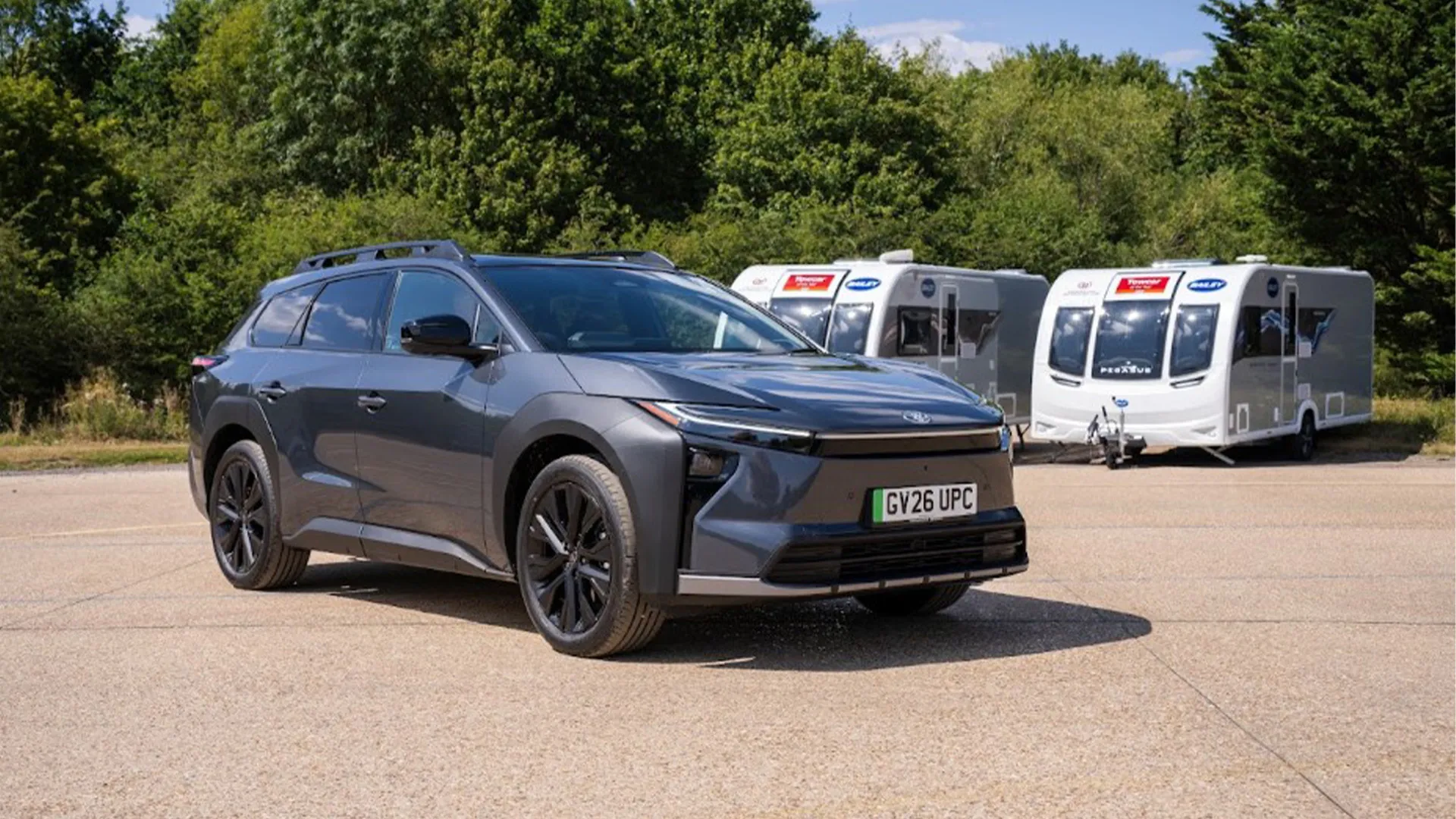
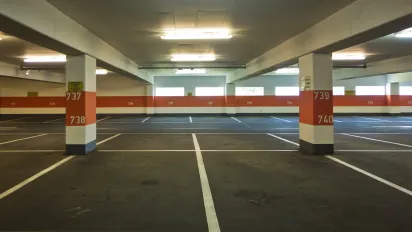
For many drivers, parking a modern car can feel harder than it used to. Multi-storey car parks feel tighter, residential streets feel more crowded, and even everyday supermarket spaces can leave you carefully squeezing out of the driver’s door.
That is not just imagination. Modern cars really are getting bigger.
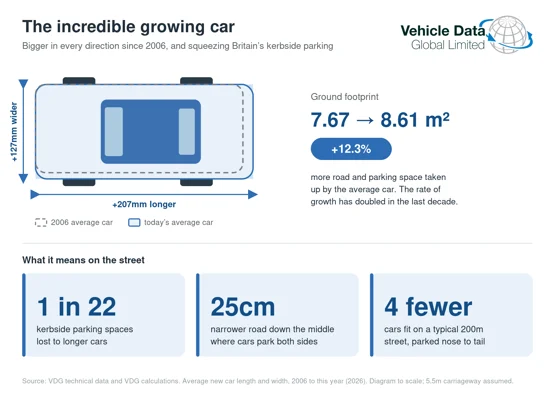
New analysis from Vehicle Data Global, reported by Business Motoring, found that the average car footprint has increased from 7.67m² in 2006 to 8.61m² in 2026. That is a rise of 12.3%, meaning the average car now takes up almost one extra square metre of space compared with 20 years ago. On a typical 200-metre residential street, VDG estimates this could mean room for around four fewer cars than two decades ago.
For drivers, businesses and fleets, this raises a simple but important question: should vehicle size now be given more thought when choosing your next lease car or van?
Why are cars getting bigger?
The rise of SUVs is part of the story, but it is not the whole picture.
Many long-running models have also grown over time. VDG’s analysis found that, since their original launches, the Vauxhall Corsa has grown its footprint by 19.3%, while the Ford Focus has increased by 13.4% and the Volkswagen Golf by 12.4%.
There are several reasons for this. Modern cars need to meet higher safety standards, which often means larger crash structures, wider bodies and more space for technology. Buyers also want more comfort, bigger boots, better seating space and more equipment. With electric cars, battery packaging can also influence size and weight.
The result is that even cars we still think of as “normal” family hatchbacks are often much larger than their predecessors.
Parking spaces have not grown at the same rate
One of the biggest issues is that many UK parking spaces were designed around older, smaller cars.
The RAC says a typical UK parking space is around 2.4 metres wide and 4.8 metres long, with those dimensions first introduced around 50 years ago when vehicles were generally smaller. It also notes that on-street parallel parking can be tighter, with the British Parking Association stating a minimum width of 1.8 metres for a parallel bay.
That creates a problem. Cars have grown, but much of the UK’s parking infrastructure has stayed broadly the same.
For drivers, that can mean more door dings, more stress in car parks and more time spent finding a suitable space. For businesses and fleets, it can also mean more low-speed damage, more repair costs and more inconvenience for employees using vehicles in busy towns and cities.
It is not just a car issue
Vans are also getting larger. VDG’s analysis found that the average van has grown from 4.9 metres long in 2006 to 5.3 metres today.
That matters for businesses operating vans in urban areas, residential streets, service yards or older car parks. A larger van may offer more load space, but it may also be harder to park, manoeuvre and store overnight.
At Rivervale, we always encourage customers to think beyond monthly cost alone. Payload, range, seating, access, height restrictions and parking all need to form part of the decision.
The safety conversation
There is also a wider safety debate around increasing vehicle size.
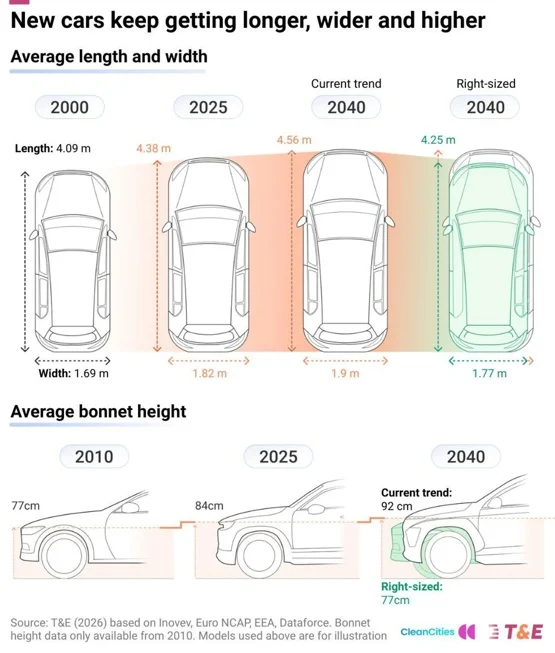
A 2026 report by Transport & Environment and Clean Cities found that newly sold cars are increasing in length by around 1.2cm each year, while vehicle height is rising by around 0.5cm annually. The same analysis suggests that if current trends continue, European cities could lose between 8.5% and 14% of on-street parking capacity by 2040.
The report also raises concerns about vulnerable road users, particularly where taller bonnets reduce visibility and increase risk in collisions with pedestrians and cyclists.
That does not mean larger cars are automatically the wrong choice. For many households and businesses, a larger vehicle is genuinely needed. Families may need three child seats, businesses may need load capacity, and some drivers may value a higher seating position or extra towing ability.
The key point is that size should be a conscious choice, not an afterthought.
What should you check before leasing your next vehicle?
When comparing lease deals, it is easy to focus on price, range, fuel economy, boot space or monthly rentals. Those are all important, but dimensions deserve a place on the checklist too.
Before choosing your next car or van, consider:
- Does the vehicle fit comfortably on your driveway or in your usual parking space?
- Will it be used regularly in tight city streets or multi-storey car parks?
- Could a slightly smaller model do the same job with less stress?
- Does the vehicle have useful parking technology, such as cameras, sensors or a 360-degree view?
- For business users, will employees feel confident driving and parking it every day?
- For electric vehicles, is the extra size justified by the range, practicality or load space you need?
These questions are especially important for fleets. A vehicle that looks ideal on paper may not be the best fit if it regularly operates in congested areas or tight parking environments.
Bigger is not always better
The growth in vehicle size has delivered real benefits. Modern cars are safer, quieter, more comfortable and more practical than ever. Many larger SUVs and electric vehicles make brilliant family cars and company cars.
But bigger is not always better for every driver.
As UK roads, car parks and residential streets become busier, choosing the right-sized vehicle could make everyday driving easier, cheaper and less stressful.
Whether you are leasing your first car, renewing a company car or reviewing a fleet policy, it is worth looking beyond the headline deal. The best vehicle is not always the biggest one. It is the one that fits your life, your work and the places you actually drive.
At Rivervale, our team can help you compare cars, vans and electric vehicles based on more than just price. From dimensions and practicality to running costs, range and suitability, we can help you find a lease vehicle that makes sense in the real world.