
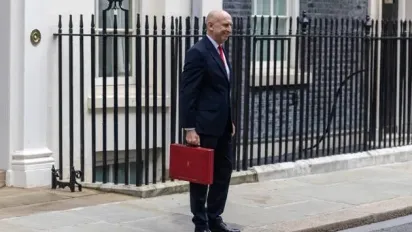
The Autumn Budget 2026 has brought some welcome short-term relief for motorists, but it has also made one thing increasingly clear: the way Britain taxes driving is beginning to change.
For petrol and diesel drivers, the Government has extended the temporary 5p-per-litre reduction in fuel duty and delayed the planned increase until July 2027. People who use their own car or van for work are getting more generous mileage allowances. Electric car drivers who charge at home continue to benefit from the temporary removal of VAT from domestic electricity, while £100 million has been committed to reducing the cost of some local public charging.
Look further ahead, however, and electric vehicle drivers will face a completely new form of motoring taxation.
From 1 April 2028, the Government will introduce Electric Vehicle Excise Duty, or eVED, with electric and hydrogen cars charged according to the miles they cover. Battery-electric and hydrogen cars will initially pay 3p per mile, while plug-in hybrids will pay 1.5p per mile.
So, is the Autumn Budget good news for motorists?
Our view is that it offers useful short-term support, particularly while household and motoring costs remain under pressure, but it also signals a much bigger shift. The question facing drivers is gradually moving beyond simply "how much is road tax?" towards "how much will this car cost me for every mile I drive?"
That could have a significant influence on how motorists choose their next car.
Autumn Budget 2026: the key changes for motorists
For anyone who simply wants the headlines:
- The temporary 5p-per-litre fuel duty cut is being extended, with the planned RPI increase deferred until 1 July 2027.
- The approved mileage rate is 55p per mile for the first 10,000 qualifying business miles, with the higher-mileage rate increasing to 35p from 6 April 2027.
- VAT on domestic electricity is temporarily reduced from 5% to 0% until 1 July 2027, which also benefits EV drivers charging their cars from a domestic electricity supply.
- The Government will provide £100 million over two years from spring 2027 to reduce prices at lower-powered public EV chargers near people's homes.
- Electric Vehicle Excise Duty starts on 1 April 2028, initially charging battery-electric and hydrogen cars 3p per mile and plug-in hybrids 1.5p per mile.
- Company car tax appropriate percentages will increase by one percentage point across all emissions bands for 2030/31.
Here is what those changes actually mean for motorists.
Fuel duty: short-term relief for petrol and diesel drivers
For many motorists, this is likely to be the most immediately noticeable part of the Budget.
The Government's temporary 5p-per-litre cut to fuel duty is being extended and the planned RPI-linked increase has been deferred until 1 July 2027.
That does not mean petrol and diesel prices are guaranteed to fall.
Fuel duty is just one component of the amount motorists pay at the pump. The Budget can prevent a tax increase from adding to the cost, but it cannot guarantee what drivers ultimately pay for petrol or diesel.
Rivervale's view
Extending the cut provides some welcome certainty for motorists, but continually postponing fuel duty increases is not a long-term motoring tax strategy.
The more interesting development is happening elsewhere.
As Britain shifts gradually from petrol and diesel towards electric vehicles, tax revenue linked directly to fuel consumption becomes less effective. The introduction of eVED shows how the Government intends to start addressing that problem.
In other words, the fuel duty announcement matters today, but pay-per-mile taxation tells us considerably more about where motoring taxation may be heading tomorrow.
Driving your own car for work? The mileage allowance gets better
This is an important Budget measure that could easily be overlooked by private motorists.
Approved Mileage Allowance Payments allow employers to reimburse employees tax-free when they use their own vehicle for qualifying business journeys.
From 6 April 2026, the car and van rate for the first 10,000 business miles increased from 45p to 55p per mile.
The Budget has now confirmed 55p for the first 10,000 miles and will raise the rate applying above 10,000 miles to 35p per mile from 6 April 2027.
One important point is that the approved rate is not necessarily what your employer has to pay. HMRC describes the AMAP rate as advisory and employers can reimburse more or less. Where an employee receives less than the approved amount, they may be eligible to claim Mileage Allowance Relief on the difference.
For anyone who regularly uses their own car for work, this is therefore worth checking rather than assuming their existing expense payment will automatically change.
Home charging gets another advantage over public charging
There is good news for EV drivers who can charge their cars at home.
VAT on domestic electricity was cut from 5% to zero from 1 October 2026 and the Budget extends that measure until 1 July 2027.
Although this policy is designed as household energy support rather than specifically as an EV incentive, an electric vehicle charged from a domestic electricity supply naturally benefits from lower household electricity costs.
And that highlights one of the biggest questions facing electric motoring: where you charge can matter enormously.
A motorist with off-street parking and access to domestic charging has a fundamentally different experience from someone who parks on the road and relies heavily on public infrastructure.
The Government appears to recognise that disparity.
£100 million to reduce local public EV charging costs
From spring 2027, the Government says it will provide £100 million over two years to cut the cost of lower-powered public chargers close to people's homes across Britain.
These are the sorts of chargers found on residential streets where cars can remain plugged in for several hours or overnight. According to the Government, they account for around a third of the existing charging network.
The Government says the intervention should save motorists reliant on these chargers around £150 per year on average.
Perhaps more interestingly, an industry-led "tariff porting" taskforce will explore whether motorists could use their domestic electricity tariff at certain public chargepoints.
Why this could matter more than the £150 saving
This is potentially one of the Budget's most important motoring announcements.
The EV transition has a basic fairness problem: motorists who have a driveway or other off-street parking can generally access domestic electricity for charging, while someone who parks on the street may need to rely on public infrastructure.
Reducing that inequality matters not just to today's EV drivers, but to motorists considering whether their next car can realistically be electric.
The £100 million intervention is therefore welcome. But tariff porting could ultimately prove the more important idea if it results in drivers without driveways gaining meaningful access to domestic-style electricity pricing away from home.
For now, however, it is something being explored rather than a benefit motorists should factor into their running-cost calculations today.
EV pay-per-mile tax: eVED starts in April 2028
This is arguably the most significant long-term motoring tax change in the Budget.
From 1 April 2028, Electric Vehicle Excise Duty will introduce a mileage-based tax for battery-electric cars, plug-in hybrids and hydrogen fuel-cell cars.
The initial rates will be:
- Battery-electric vehicles: 3p per mile
- Hydrogen fuel-cell vehicles: 3p per mile
- Plug-in hybrids: 1.5p per mile
These rates are due to be uprated from 2029/30 in line with CPI.
Importantly, this is an extension of the existing VED system rather than a replacement for it.
The Government's rationale is that petrol and diesel motorists contribute through fuel duty according to the amount of fuel they use, while EV drivers do not. As EV adoption grows, fuel-duty receipts are expected to decline, creating the need for an alternative way for electric vehicles to make a usage-related contribution.
How much will the EV pay-per-mile tax cost?
At the Government's initial rate of 3p per mile, the calculation for a battery-electric car is straightforward.
5,000 miles per year: £150
8,000 miles per year: £240
10,000 miles per year: £300
12,000 miles per year: £360
15,000 miles per year: £450
20,000 miles per year: £600
These examples are Rivervale calculations using the Government's announced initial 3p-per-mile rate.
For a plug-in hybrid charged at 1.5p per mile, the equivalent cost would be half as much.
That makes annual mileage a noticeably more important factor when comparing vehicle running costs.
How will the EV pay-per-mile tax work?
One concern inevitably raised by any pay-per-mile tax is whether motorists will need their journeys tracked.
The Government's proposed eVED system is based on mileage readings rather than compulsory tracking of individual journeys.
When renewing their VED and eVED, drivers will provide their vehicle's odometer reading and estimate the mileage they expect to cover during the coming tax period, normally one year. Payment can either be made upfront or spread across the year. A later mileage reading will allow the amount due to be reconciled with the mileage actually travelled.
For cars already subject to an MOT, Government guidance says existing MOT mileage information will typically mean there are no additional steps for verifying the reading.
That distinction matters.
Describing eVED simply as a "tracking tax" would be misleading based on the system the Government has actually proposed.
Does the pay-per-mile tax make electric cars a bad choice?
No, and this is where motorists need to look beyond the headline.
A new tax is obviously an additional cost for EV drivers. Someone driving 10,000 miles a year in a battery-electric car would have another £300 per year to account for at the initial rate from April 2028.
But deciding that this automatically makes an EV more expensive than petrol or diesel would be equally misleading.
More importantly, motorists should compare whole running costs, rather than one individual tax.
The calculation should include factors such as:
- annual mileage
- access to home or public charging
- electricity prices
- real-world vehicle efficiency
- petrol or diesel consumption
- Vehicle Excise Duty
- eVED from 2028
- insurance
- servicing and maintenance
- the acquisition, finance or leasing cost of the vehicle
For company car drivers, Benefit-in-Kind taxation is another major consideration.
So while eVED reduces one of the financial advantages enjoyed by electric cars, it does not in itself answer whether petrol, hybrid or electric represents better value for a particular driver.
Road tax and EVs: don't confuse VED with eVED
This is an area where motorists could understandably become confused.
Electric cars are already within the Vehicle Excise Duty system. eVED will be an additional mileage-based component beginning in April 2028.
Under the rates applying from April 2026, zero-emission cars registered from 1 April 2025 are already subject to VED. For cars registered from 1 April 2026, the first-year zero-emission rate is £10. The standard annual rate is £200, while qualifying zero-emission cars with an original list price above £50,000 can also become liable for the additional rate from their second licence.
So from April 2028, the important distinction is:
VED is the existing vehicle tax.
eVED adds a charge based on the miles an eligible vehicle travels.
Understanding that difference will become increasingly important when comparing future running costs.
What about company car tax?
The Budget also gives businesses and company car drivers more information about the longer-term tax position.
For the 2030/31 tax year, the appropriate percentage used to calculate company car tax will rise by one percentage point across all emissions bands, including zero-emission cars. The maximum percentage will be 40%.
The Government says the intention is to maintain a significant tax differential between electric and internal-combustion cars while providing certainty over future rates.
For anyone choosing a company car today, 2030 may sound distant.
But for businesses considering fleet policy, longer-term taxation matters because the direction of travel is becoming increasingly clear: electric vehicles remain tax-favoured, but some of the exceptionally favourable taxation used to encourage early adoption is gradually being reduced as EVs become more established.
Petrol, diesel, hybrid or electric after the Autumn Budget?
There is no single car or fuel type that suddenly becomes the "winner" as a result of this Budget.
That is actually one of its most important lessons.
Petrol
Petrol remains a straightforward option for motorists covering lower or moderate mileages, particularly where home EV charging isn't practical.
The extension of the fuel duty cut prevents an imminent tax-driven increase, although motorists remain exposed to changes in the underlying cost of fuel.
Diesel
Diesel can still make sense for some drivers covering substantial motorway mileage, but the decision increasingly needs to be based on how the car will actually be used rather than the old assumption that high mileage automatically means diesel.
Hybrid
Full hybrids may appeal to drivers looking to reduce fuel consumption without needing to plug in.
Plug-in hybrids occupy a more complicated position because their economics depend greatly on whether they are actually charged regularly. From April 2028, PHEVs will also face the 1.5p-per-mile eVED rate.
Electric
Electric cars can remain particularly attractive where motorists can charge cheaply at home, but prospective EV drivers should now include eVED in calculations covering ownership or leasing beyond April 2028.
Drivers dependent on public charging should look particularly carefully at their individual charging arrangements. Government intervention could improve the position for people using slower residential public charging, but some of the measures announced alongside the Budget have yet to be fully developed.
Rivervale's verdict: the Budget starts changing the question motorists need to ask
There is plenty of short-term assistance for motorists in the Autumn Budget 2026.
Fuel duty support continues. Business mileage allowances are becoming more generous. Domestic electricity receives temporary VAT relief and the Government is intervening to tackle some of the higher costs faced by EV drivers without access to home charging.
But we think the bigger story sits beneath those individual announcements.
Britain's motoring tax system is starting to adapt to a world in which the fuel pump can no longer do all the tax collecting.
That makes eVED much more significant than a £300 annual charge for a hypothetical 10,000-mile EV driver. It establishes the principle that at least some motoring taxation will be based directly on how far an eligible vehicle travels.
There is logic to that. Electric cars still use roads and infrastructure. As petrol and diesel consumption falls, governments face the question of how declining fuel-duty revenue should ultimately be replaced.
The challenge is getting the balance right.
If driving electric becomes too heavily taxed before motorists without driveways have gained access to genuinely competitive charging, there is a risk of weakening the financial case for people who are considering switching to an EV.
That is why the public-charging announcement could eventually prove just as consequential as eVED itself.
For motorists, our advice is not to choose your next car because of one Budget headline. Calculate the cost around how you actually drive.
How many miles will you cover? Can you charge at home? How much business mileage do you do? Will you still have the vehicle in April 2028? What will fuel or electricity actually cost you?
Those questions will tell you far more than simply asking whether petrol, diesel or electric "won" the Budget.
Frequently Asked Questions
The Autumn Budget extends the temporary 5p-per-litre fuel duty cut and defers the planned RPI increase until 1 July 2027.
Electric Vehicle Excise Duty is scheduled to begin on 1 April 2028.
The initial eVED rate will be 3p per mile for battery-electric and hydrogen fuel-cell cars and 1.5p per mile for plug-in hybrids.
The published eVED proposal is based on vehicle mileage readings and estimated annual mileage rather than the compulsory tracking of individual journeys. Drivers will provide an odometer reading and an estimate of their forthcoming mileage, with the amount ultimately reconciled against mileage travelled.
Yes. Electric cars are already subject to Vehicle Excise Duty. eVED will add a mileage-based component from April 2028 rather than replacing ordinary VED.
The Government is providing £100 million over two years from spring 2027 to reduce prices at certain lower-powered public chargers close to motorists' homes. The Government estimates users who depend on these chargers could save around £150 a year on average.
For cars and vans, the approved rate is 55p per mile for the first 10,000 qualifying business miles. The higher-mileage rate will increase to 35p from 6 April 2027.
Official sources
All factual Budget and taxation information referenced in this article has been drawn from official UK Government sources:
HM Treasury: Budget 2026 Policy Costings
Covers the extension of the 5p-per-litre fuel duty cut, the delay to the RPI fuel duty increase, the temporary 0% VAT rate on domestic electricity and changes to business mileage rates.
Read Budget 2026 Policy Costings on GOV.UK
HM Revenue & Customs: Electric Vehicle Excise Duty (eVED)
Confirms eVED will apply from 1 April 2028 at an initial 3p per mile for battery-electric and hydrogen cars and 1.5p per mile for plug-in hybrids. It also explains mileage declarations, payment and reconciliation.
Read the Electric Vehicle Excise Duty guidance on GOV.UK
HM Treasury: eVED consultation and Government response
Provides the background to eVED and confirms that the mileage-based charge was originally announced at Autumn Budget 2025, with the consultation concluded in July 2026.
Read the eVED consultation outcome on GOV.UK
HM Treasury: Cutting electric vehicle charging costs
Details the £100 million investment from spring 2027 to reduce costs at lower-powered public chargers near people's homes, the estimated £150 average annual saving for drivers relying on them, and the tariff-porting taskforce.
Read the EV charging costs announcement on GOV.UK
HM Revenue & Customs: Increasing mileage rates
Explains the increase to 55p per mile for the first 10,000 business miles for cars and vans from 6 April 2026 and how Approved Mileage Allowance Payments work.
Read HMRC's mileage rate policy on GOV.UK
HM Revenue & Customs: Travel mileage and fuel rates and allowances
Provides the official current HMRC mileage rates for cars, vans, motorcycles and bicycles.
View HMRC mileage and fuel rates on GOV.UK
HM Revenue & Customs: Company car tax rates for 2030/31 and 2031/32
Confirms Budget 2026's change to company car tax, including the one percentage point increase across emissions bands for 2030/31 and a maximum appropriate percentage of 40%.
Read the company car tax policy on GOV.UK
HM Revenue & Customs: Budget 2026 Overview of Tax Legislation and Rates
The Government's detailed overview of tax policy measures announced at Budget 2026.
Read the Budget 2026 tax legislation overview on GOV.UK


